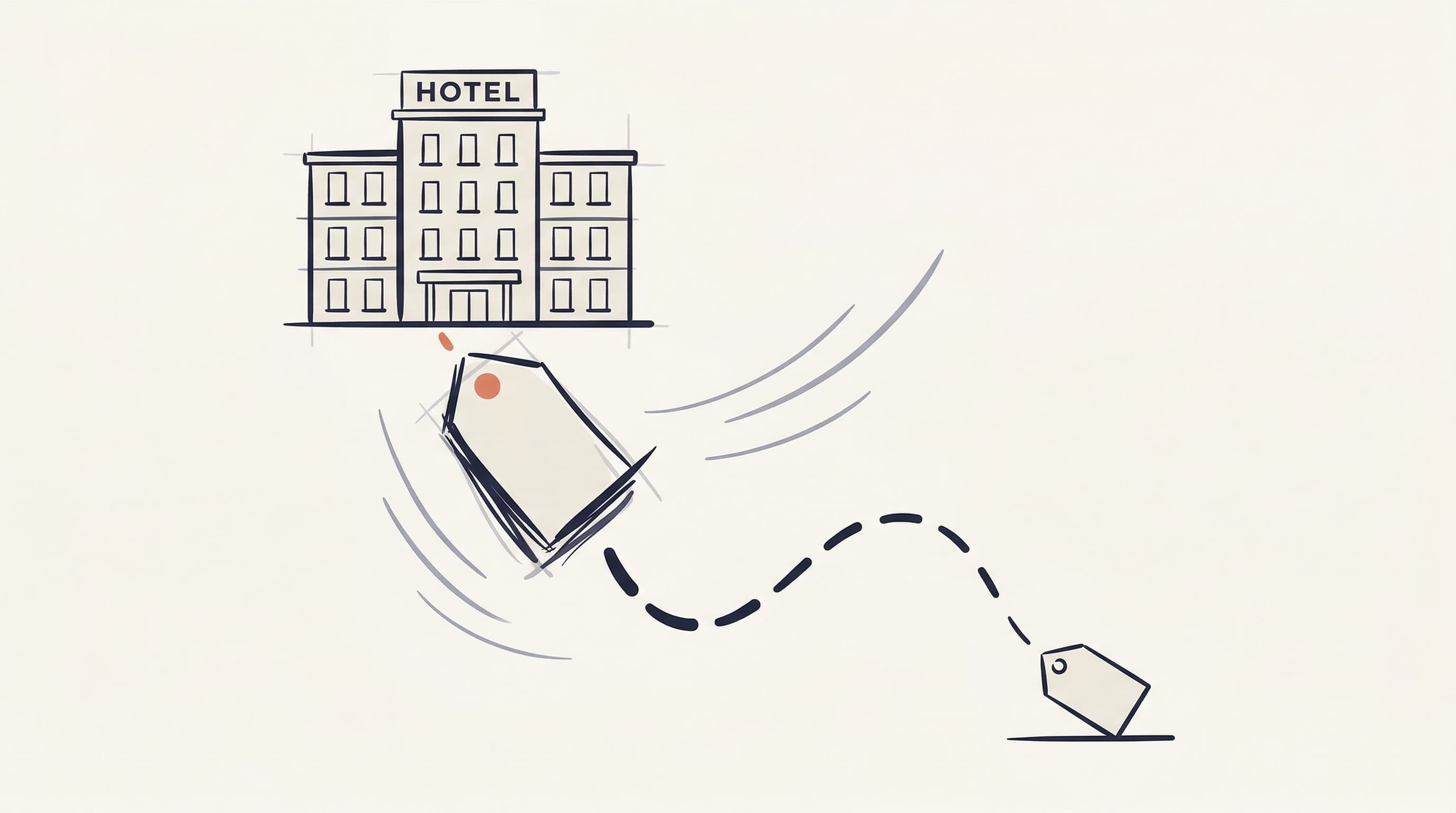
You found a hotel, compared a few rates, and booked. Done. You close the tab and move on with your life.
But between the moment you book and the day you check in, there's a good chance the price on your room will drop. A RatePunk study of 28,000 bookings found that 57 percent saw a lower rate appear before check-in. Pruvo, another price tracking service, puts the number at 40 percent.
Most people never find out.
How hotel dynamic pricing works
Hotel pricing is not fixed. It's not even close to fixed. Hotels adjust room rates based on occupancy, demand forecasts, competitor pricing, day of the week, events in the area, and how far out the check-in date is. The industry calls this dynamic pricing, and it has been standard practice for years.
What has changed recently is scale. Hotels now use pricing algorithms that make hundreds of adjustments per day. 85 percent of hotels plan to increase their investment in these systems. Rate volatility can hit 42 percent during peak periods, meaning a room could cost significantly less tomorrow and spike again the day after.
This isn't hotels trying to trick you. It's supply and demand, automated and running 24/7. When occupancy projections change, prices move immediately. A block of rooms gets released from a cancelled group booking? Prices drop. A conference gets announced nearby? Prices spike. The algorithm doesn't care that you already booked at the higher rate.
Why most people miss the hotel price drop
Once you book, the booking is done. You move on to planning the trip itself. Nobody sits there checking hotel prices every day for weeks. That would be absurd.
Then there's the cancellation deadline problem. 73 percent of hotel bookings are refundable, so in theory you could cancel and rebook at a lower price. But when does that window actually close? The deadline is buried somewhere in a confirmation email you read once. A price drop is useless if the window already closed and you didn't notice.
And even if you suspect prices might change, the effort of checking daily and managing the cancel-and-rebook process feels like more hassle than it's worth. So you don't bother. A Navan survey found 71 percent of travellers feel anxious about whether they got the best price on their hotel. Based on the data, they're right to worry.
How to cancel and rebook a hotel at a lower price
If you booked a refundable rate and the price drops before your cancellation deadline, the process is straightforward:
- Book the same room at the new, lower price on whatever site has it
- Confirm the new booking is locked in
- Cancel the original booking within the cancellation window
- Pocket the difference
Order matters here. Always confirm the new booking before cancelling the old one. You don't want to end up with no room at all.
The catch is timing. You need to know three things: the current price, your original price, and when your cancellation window closes. Miss any one of those and the opportunity slips away.
How often hotel prices drop after booking
The data is consistent across multiple tracking services. Pruvo and HotelSlash both report that when users catch a drop and rebook, the savings are meaningful — often enough to cover a nice dinner or a day trip. The exact amount depends on how far in advance you book, the hotel's market, and the season. But the pattern holds: the price you paid is often not the lowest price that will appear before your trip.
Hotel price tracking tools compared
A handful of services monitor hotel prices after you book. They all work roughly the same way: you forward your confirmation email, they parse the booking details, and they check prices periodically until your check-in date.
Pruvo is free and sends price drop alerts with links to rebook through their affiliate partners. It works, but it only covers partner sites and doesn't track cancellation deadlines.
HotelSlash charges a yearly fee and monitors across 50+ booking sites. Same gap: no deadline tracking.
RatePunk takes a different approach with a browser extension that shows rate comparisons when you visit booking pages. More useful before you book than after.
None of these track when your cancellation window closes. So you can get a price drop alert on Tuesday and not realize your deadline passed on Monday.
What you can do about it
The simplest approach is manual. When you book a hotel, add two things to your calendar: the cancellation deadline and a reminder to check the price a few days before that deadline. If the price has dropped, rebook. If not, move on.
The problem is obvious: this doesn't scale past one or two bookings. And you're only checking once, not catching the best moment.
For something more automated, tools like Pruvo and HotelSlash handle the price monitoring part. If deadline tracking matters to you (and it should, because a price drop you can't act on is worthless), StayHawk combines both. It parses your confirmation email for the cancellation deadline, monitors prices daily, and only alerts you when a cheaper rate appears while you can still cancel and rebook.
Whatever approach you pick, the takeaway is the same: hotel prices drop after you book more often than you'd expect, and the savings from a rebook add up fast. The travellers who come out ahead are the ones who keep watching.
Frequently asked questions
How often do hotel prices drop after booking? Between 40% and 57% of hotel bookings see a lower rate appear before check-in, based on data from Pruvo and RatePunk. The exact frequency depends on the hotel's market, how far out you booked, and the season.
How much can you save by rebooking a hotel at a lower price? The average savings per rebook runs $60 to $120, depending on the hotel and length of stay. Savings tend to be larger on longer stays and during periods of high rate volatility.
Can I cancel my hotel booking and rebook at a lower price? Yes, if you booked a refundable rate and the cancellation deadline hasn't passed. Book the new rate first, confirm it, then cancel the original. Always secure the new booking before cancelling the old one.
Why do hotels change prices after I book? Hotels use dynamic pricing algorithms that adjust rates based on occupancy, demand forecasts, competitor pricing, local events, and how close the check-in date is. These systems make hundreds of adjustments per day.
Do I need a tool to track hotel price drops? Not strictly. You can manually check prices on booking sites and set calendar reminders for your cancellation deadline. But manual tracking takes 10 to 15 minutes per check per booking and you'll miss drops that appear between checks.
Track your bookings and catch price drops before your cancellation deadline closes. Start tracking for free — no credit card required.